
LESSONS FROM BONHOEFFER FOR THE TIMES WE’RE IN …
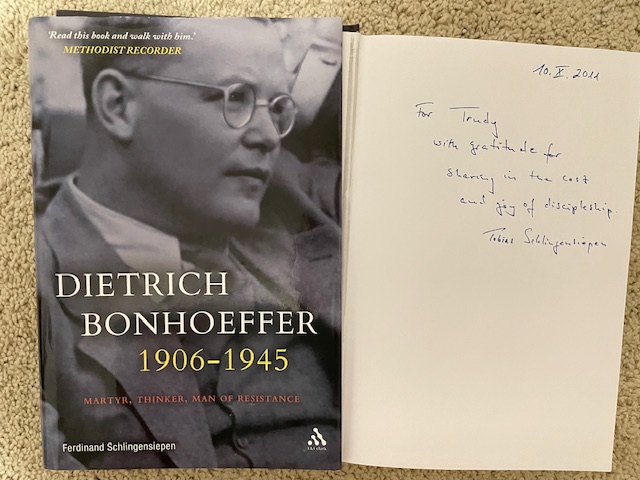
I spent much of the last year reading through Ferdinand Schlingensiepen’s comprehensive biography of Dietrich Bonhoeffer, subtitled Martyr, Thinker, Man of Resistance. The biography has been out for about 15 years now … and my copy was a gift from a colleague, Tobias Schlingensiepen, the author’s nephew, less than a year after publication. If their surname itself isn’t a tell, Tobias’s dating on his inscription in my copy was done auf Deutsch. From our many conversations as we worked together, I knew Tobias still has close contact with much of his family in Germany … that members of his family had also been involved in the resistance movement during the Nazi era … that Eberhard Bethge (Bonhoeffer’s closest friend) was a long-time family friend … and that relatives back in that era had connections with the Bonhoeffer family. Tobias, Ferdinand, and their family know who and what they are talking about.
Two events prompted me to finally take it from my bookshelf and read it …
First was the release in the fall of 2024 of an awful movie about Dietrich Bonhoeffer that was clearly based on the widely panned biography Eric Metaxas wrote about the German theologian, resister, and eventual martyr about a year after Schlingensiepen’s work was published. Upon its release, Metaxas’s work was widely criticized for making far more of Bonhoeffer’s involvement in the plot to assassinate Hitler than the record actually suggests as well as minimizing his far more influential work in the resistance movement and efforts to preserve authentic Christian faith from the distortions of the Nazi movement. Promotional posters for the 2024 movie that depicted Bonhoeffer with a gun in hand amply illustrated just how far from the facts the movie had strayed.
Second was the change in administrations in our nation’s capitol. As things unfolded, I was reading the chapter titled “The Year 1933” as the inauguration and immediate aftermath were playing out. For those who never could keep all those dates and events straight in history class, 1933 was the year Adolph Hitler finally acquired sufficient power to carry out his long-term plans and agenda in the governance of Germany. The parallels between then-and-there and here-and-now were both striking and frightening … which had much to do with my slow progress through the biography … and why it’s taken me over year to compose these thoughts into this post.
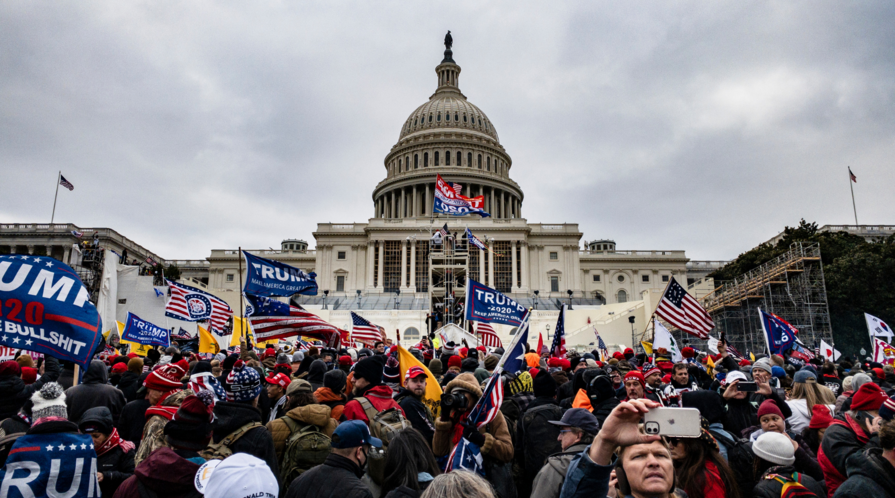
Since finishing the book and witnessing the first year of the current administration, two conclusions are readily apparent: First, the current occupant of the Oval Office is not a second emergence of Adolph Hitler. Hitler could be strategic (until his ego got the better of him), politically astute, and savvy; the current occupant is none of these. Second, the people actually doing the work of governance in our country right now, primarily the architects of Project 2025, clearly did their homework on the Nazis of Germany. One of the lessons they learned is to hide behind the star players, to work quietly and behind the scenes as they execute their plans. The less they are seen as the public face of policy, the more easily they can carry out their project of remaking American governance to fit their desires. With few exceptions, they are in assistant and deputy positions, administrative roles – not cabinet secretaries or other high-profile roles. These architects of Project 2025 are primarily members of the Heritage Foundation, a policy incubator that has long blended Christian terminology and governmental theories.

It is this merging of Church and State that is a major point of connection between Nazi Germany and the United States today. One of the early moves Hitler made in 1933 was to create a Reich Church. Then, as now, there were a number of Roman Catholics in Germany, and because the Pope, as ever, was the supreme authority for the Roman Church, there was little that Hitler and his Nazi Party could direct for the Catholics. However, with time and attention, Hitler (nominally a Catholic) was able to negotiate a statement of agreement with the Vatican.
The Protestants, however, were another matter. Part of what had helped Martin Luther’s protest movement succeed in Germany (back in the early 1500s) was that a number of German princes recognized an opportunity to push back on imperial power by supporting the reform movement. What developed from that over the subsequent centuries was a collection of provincial churches and some intermingling of church and social governance. By the early decades of the 1900s, the various Protestant Churches of the German provinces were working toward unity, and the proper use of Luther’s “two kingdoms” doctrine was a major focus of their ongoing debates. The gist of the two kingdoms doctrine is that religious authorities govern in spiritual matters and secular authorities govern the operations of the state. However, when power is up for grabs (as is often the case) there will ever be much disputing which sphere of governance should take charge.
The struggle for leadership within the Protestant Churches of Germany began soon after Hitler seized power in January 1933. Hitler and his designates took a leading hand in unifying the provincial churches into their desired Reich Church. A number of delegates to the constituting conventions openly wore the brown uniforms of Nazi Party members. Party members presided over the meetings and processes. The previous constitutions of the churches were jettisoned and their prior leadership structure was to be replaced with ten provincial bishops under the direction of a single Reich Bishop … and it was Hitler’s chosen candidate, a weak and incapable man, who was quickly elected to that position.
Yes, there was opposition to this interference within the German churches from the beginning. It wasn’t as strong as it might – arguably should – have been. Very soon after Hitler came to power, the Young Reformation movement coalesced against the interference by the state in the churches. That first movement soon gave rise to the Pastors Emergency League, which pushed back against the clergy suspensions by the state and the efforts to exclude non-Aryans from the Church, especially from leadership roles. Right before the voting on the new church constitution was to occur, this “Aryan paragraph” (barring non-Aryans from clergy positions) was publicly withdrawn … and that move undercut the opposition efforts. Without a central point to organize against, the opposing organization collapsed. The churches that did not sign on to the Evangelical German Reich Church were known as “intact churches.” These congregations and the clergy of the Pastors Emergency League gave rise to the Confessing Church movement of Christian resistance to the Nazi regime.
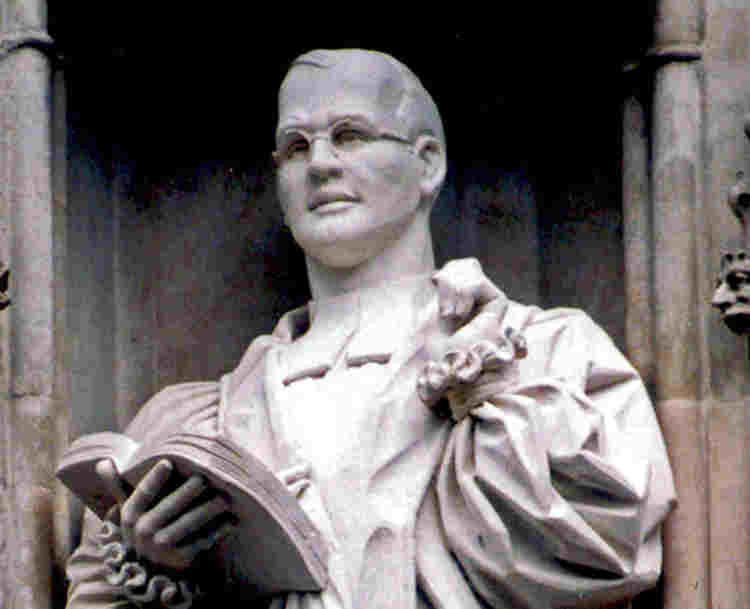
Dietrich Bohoeffer was one of the earliest opponents of the German Reich Church movement, quickly discerning the disastrous implications inherent in what was being proposed. He was a leader in the Pastos Emergency League and then the Confessing Church. With support from long-time family connections, he was able to operate a clandestine seminary to train pastors for the congregations of the Confessing Churches. However, because these churches did not have legal status, it was hard to place the seminarians as pastors. A number of his students were compelled to serve in the military and were killed in the battles of World War II.
The Confessing Church was not the only locus for resistance to the Nazi regime. A significant resistance organization operated within the hereditary military leadership, which was largely centered within the Office of Military Intelligence. Bonhoeffer’s brother-in-law, Hans Dohnányi had been part of this from the early days of the regime and worked in the Office of Military Intelligence before the Nazis came to power. After the closure of the illegal seminary, Dohnányi brought Bonhoeffer into the Resistance, primarily to help him further evade the compulsory military service that claimed the lives of a number of his students.
Bonhoeffer’s actual work in the Resistance was somewhat murky. His brother-in-law was highly involved in the plots to assassinate Hitler – even helping to acquire some of the explosives used in bombing attempts. Dohnányi obtained explosives during one of his many trips around Europe with Bonhoeffer. Bonhoeffer knew the general details of the plots, all of which involved explosives – not shooting Hitler at close range or by a sniper. He once remarked that he would carry and detonate the bomb himself if he could, but he also knew he would never be able to get close enough to Hitler to actually do this. As is often the case in such plots, the activities of Dohnányi in his trips abroad with his brother-in-law eventually aroused suspicions. Due to some inadvertent miscues by others doing resistance work within military intelligence, the efforts to cover their tracks failed and the two were arrested. An unfortunate assignment of a prosecutor further thwarted established plans to settle such matters with a more benign plea and an honorable retirement from public life and activity. Between the twists and turns of changes in prosecutors, a rescue attempt, dashed hopes that further assassination attempts might succeed, and a devastating air raid that almost prompted clemency, both were eventually convicted and sentenced to death. Although it is true that Hitler personally signed the execution orders, it was for the conspirators as a group – not Bonhoeffer singularly. These executions also took place very near the end of war in Europe and Hitler knew the end was at hand. Hitler’s actions in this timeframe were essentially those of a frustrated loser determined to do as much damage as possible in the small amount of time left for action.
Bonhoeffer’s known work in the resistance was two-fold. First was to leverage the international connections he had formed during the ecumenical movement that preceded World War II in an effort to gain outside support for the German Resistance. Second, and had the plot succeeded this would have been far more significant, was to plan for what would follow after Hitler had been killed and the Nazis removed from power. The resistance movement never lost sight of the reality that killing Hitler, difficult as that would be, would not put an end to the Nazi regime and its atrocities. A coup to replace the Nazi government was also necessary – but what to replace it with? Working this out was a major focus of Bonhoeffer’s efforts in the resistance.
The first role, endeavoring to rally support for the resistance, did allow Bonhoeffer and Dohnányi to travel in Europe outside of areas Germany controlled, even into nations actively fighting against the Germans. Because the two worked in the Office of Military Intelligence, these trips could be deemed opportunities to gather intelligence. Although Bonhoeffer’s various European contacts willingly renewed acquaintances and met with him, the efforts to garner support from their political leaders fell far short of the goal. The idea of there even being a resistance movement within Germany would have undercut the good versus evil narrative employed enthusiastically by Allied political leaders, especially Winston Churchill.
We will never know what might have been … if one of the assassination plots had succeeded … if the resistance had been given the resources to quickly and solidly replace the Nazi regime. However, the way these events are understood and applied can help those of us wanting to resist the current disaster-in-progress in challenging our national sacred stories and in charting a way forward to a better future than the one we’re racing toward pell-mell right now.
First: Bonhoeffer was not a lone (almost) hero. He always worked as part of a group, a community. We would do well to jettison the American myth of the lone hero who can right all wrongs and make everything better. That is one of the primary stories employed to sell enough of the public that the current occupant, once installed in the Oval Office, would single-handedly undo all the wrongs done to “forgotten Americans” … by the liberals, the wealthy elites who support liberal causes, other nations, and any who would dilute or refute the power of White Male Patriarchy. Thinking that if we could just get the right person into office it would solve everything is a big part of what landed us in this current mess. It will not get us out of the mess.
Second: Removing the current occupant from the Oval Office will not really change anything. Things will not go back to normal as soon as the 25th Amendment gets implemented … or impeachment happens … or time and the circle of life come around as they eventually do. Any real changes will be small and fairly inconsequential – the East Wing will be rebuilt with an upgraded security bunker and a reasonably-sized workable event space … the name branding will come off the buildings … the massive posters will come down … appropriate upgrades may be made to The Kennedy Center for the Performing Arts … all the shiny distractions to keep a toddler entertained and occupy his attention so the people really doing things can get their work done will almost certainly stop. But the basic functioning (and non-functioning) of government, the political agenda being pursued will remain unchanged. The real power players are already operating behind the scenes; the occupant is a hollow shell of a man into whom they can funnel their goals and who can (somehow!?!) sell enough of the public to vote for this. These people will still be there when he is gone, and by then, they will likely have done enough damage to structures to keep themselves in power … possibly permanently.
Third: A large segment of the American churches has been complicit in this effort and likely have not only corrupted their communities but the very term Christian … quite possibly in ways that cannot be reformed or redeemed. I’ve written extensively about this previously in the series of posts titled American Heresy. Other voices, I know, are saying much the same. Here, too, we can learn from the legacy of Dietrich Bonhoeffer. For Bonhoeffer, the foundational and formative guide for Christian living was the Sermon on the Mount (the Gospel of Matthew, Chapters 5 to 7). This is the core of Bonhoeffer’s most famous work, The Cost of Discipleship … the costly gift of grace that impels a change in way of life. The book is famous for the line “When Christ calls a man, he bids him come and die.” In this book, Bonhoeffer details not just actual martyrdom but also the necessity of dying to the ways of the world and the self in order to rise into the way of life Jesus lived and taught. That is the path forward even today to those who are fully committed the way of Jesus the Christ and seeking to live as citizens of the Reign and Realm of God.
We have to tell a better story … we have to live in a way that demonstrates the way of Jesus so people can see it — and see the difference.